An escape game at home, ready in minutes
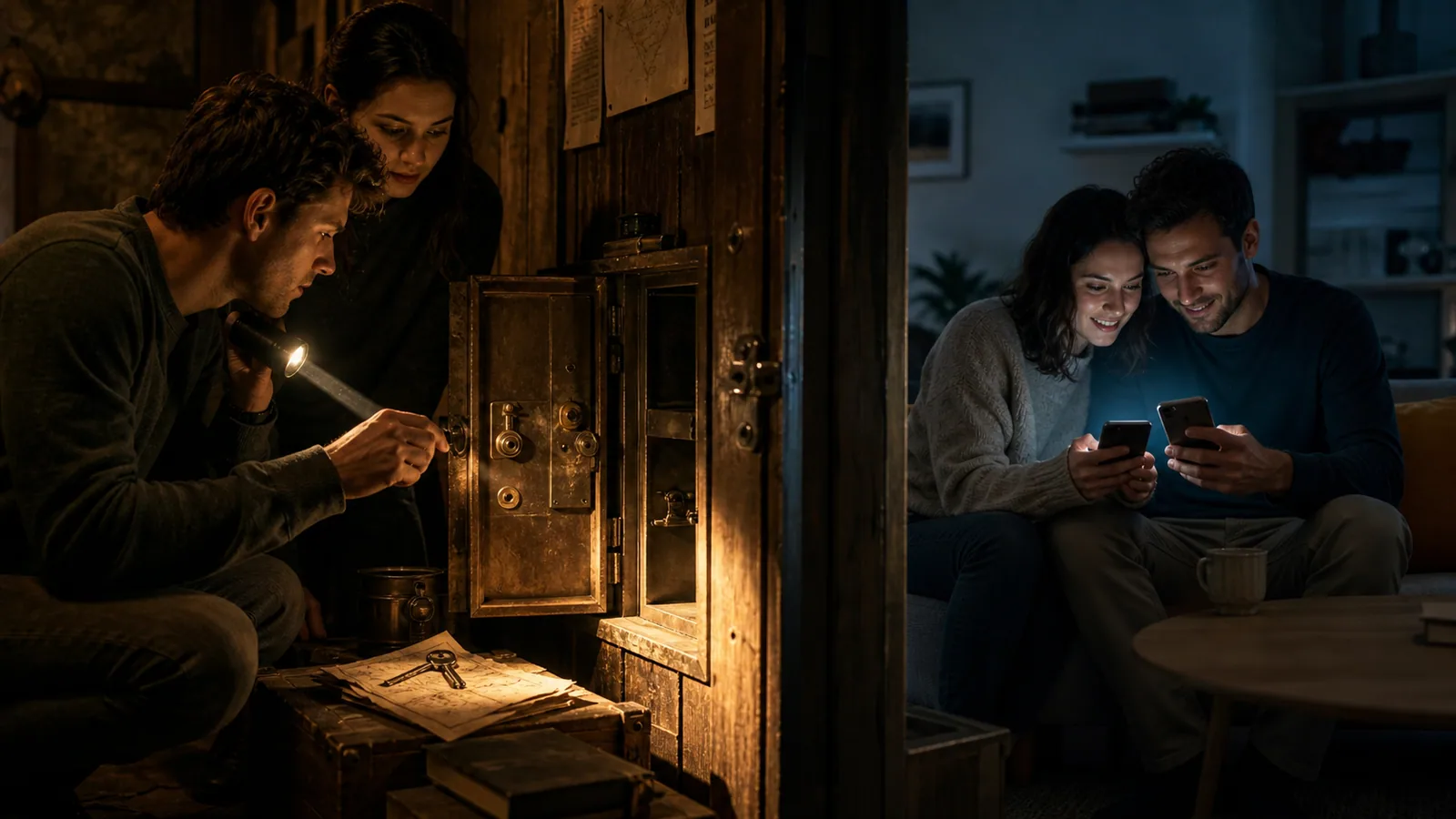
Want to turn your living room into an investigation without spending hours building puzzles? An escape game at home delivers the logic, teamwork, and immersion of an escape room without booking a venue or traveling.
There are several ways to play at home: create your own scenario, print a kit, open a boxed game, or launch a fully digital adventure. The last option is the easiest for an impromptu game night: every player uses a phone, progress stays synchronized, and no game master is required.
Here is how to choose the right format and prepare a memorable game with family, your partner, or friends.
The four at-home escape game formats
Not every home game requires the same budget or preparation time.
| Format | Preparation | Equipment | Best for |
|---|---|---|---|
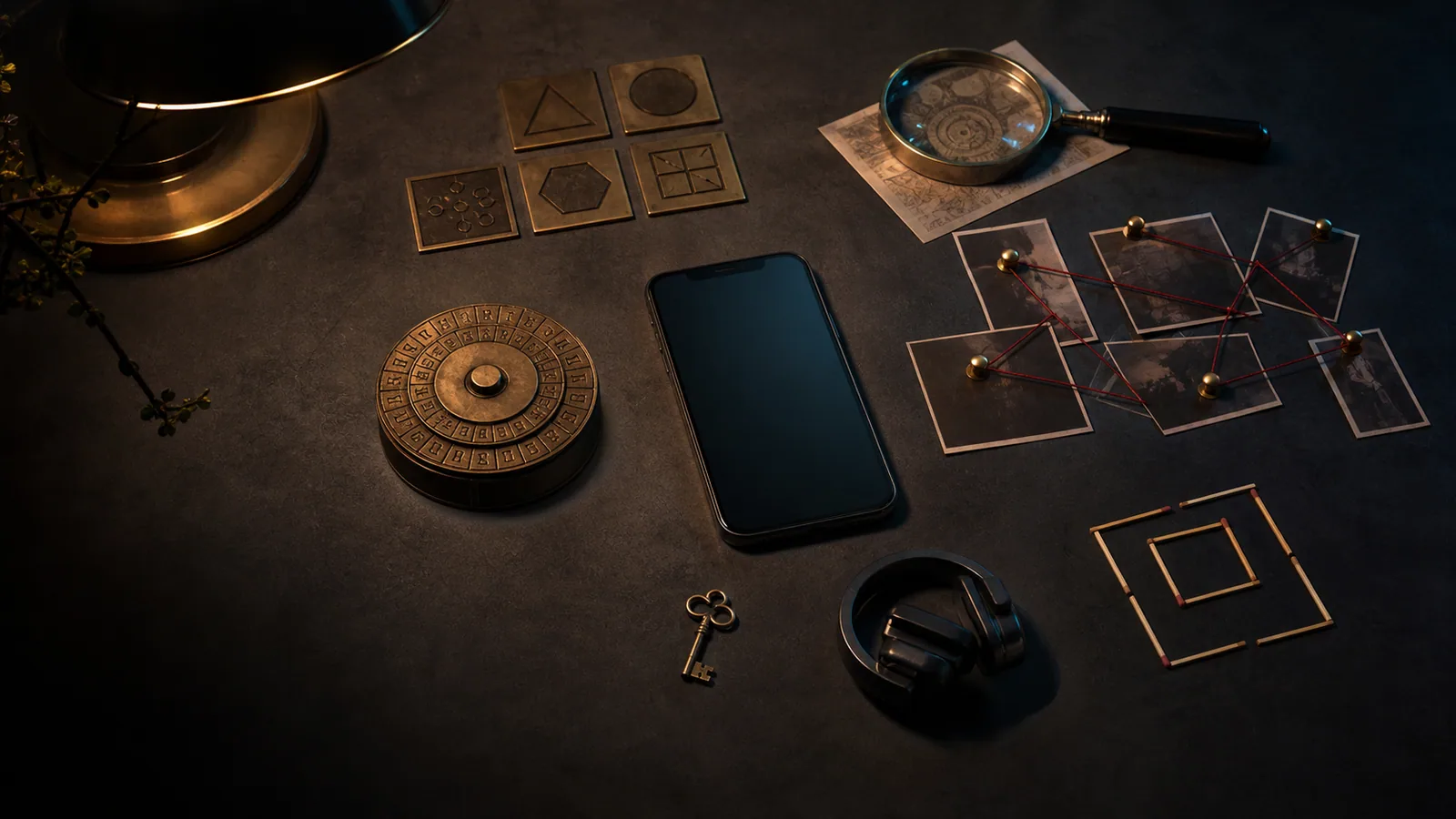
| DIY game | Several hours | Paper, props, hiding places, locks | A fully personalized adventure |
| Printable kit | 30 to 90 minutes | Printer, paper, scissors, envelopes | A birthday party or group of children |
| Boxed game | A few minutes | Cards and box components | Board game fans |
| Digital escape game | Under 5 minutes | Phones or tablets | Instant play, together or remotely |
A DIY game gives you complete freedom, but someone must write the story, test the puzzles, hide the clues, and usually stay outside the game to guide everyone. Printable kits and boxed games reduce that work but still require documents or components.
With a fully digital escape game, the app handles the story, hints, timer, and progression, so everyone can participate in the investigation.
How to play without equipment or printing
For a digital game, you only need three things:
- one phone or tablet per player;
- a stable internet connection;
- a place where you can talk and share discoveries.
Paper and a pencil can help with codes or relationships between clues, but they are optional. You do not need locks, envelopes, or special decorations.
Prepare the devices
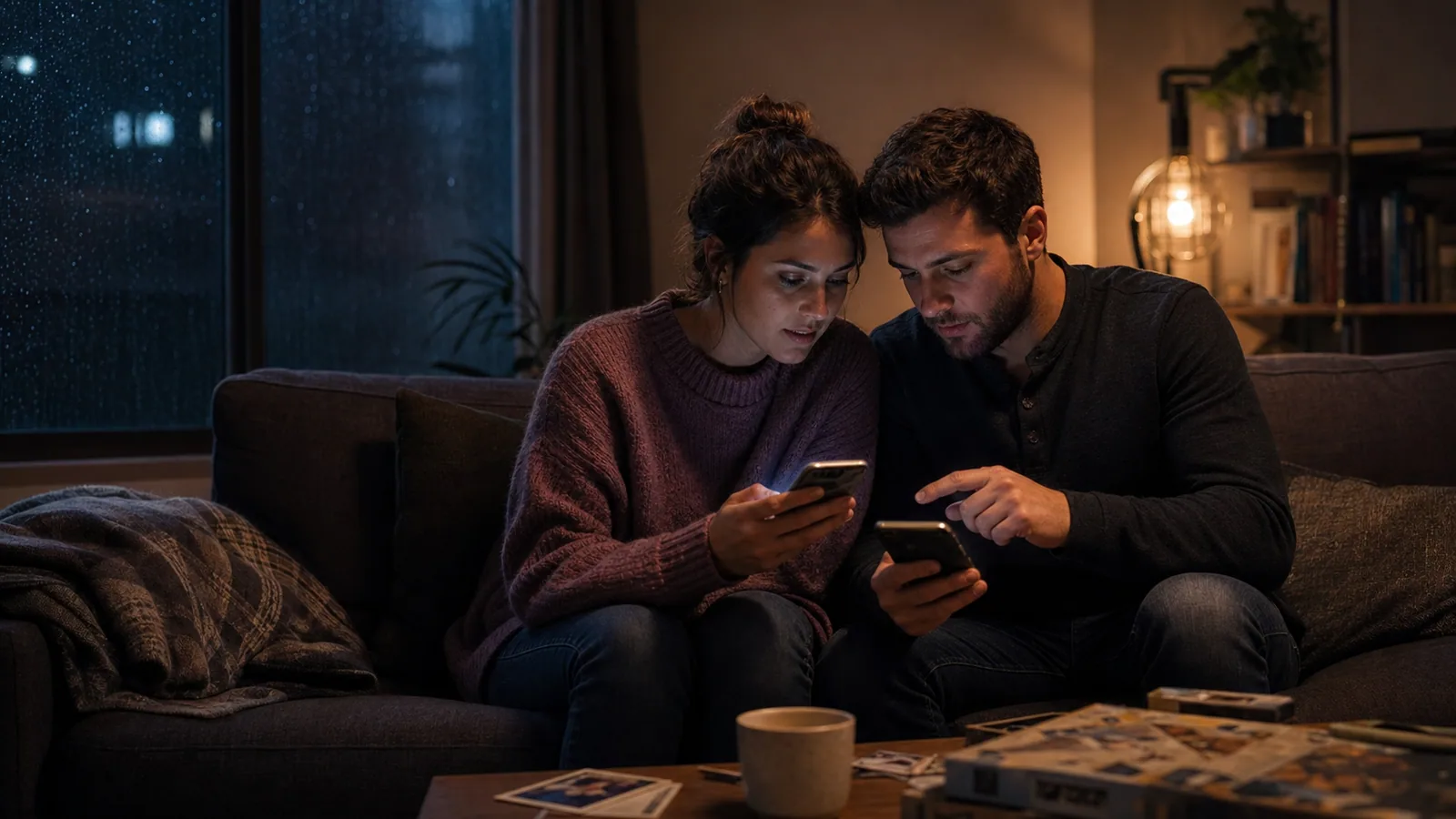
Ask every participant to open Escape Prime on the Web or their phone. One person creates the game, and the others join the same adventure. The screens remain synchronized while giving players complementary information.
This distribution matters: each person holds part of the truth. You must describe what you see, listen, and combine clues. Phones do not replace conversation; they create it.
Choose the adventure
For a first game, select an easy or intermediate level with a duration that fits your evening. Check the theme, recommended player count, and any content notes as well.
Start playing
Get comfortable, adjust the volume, and agree on a simple hint rule—for example, wait a few minutes before asking for help. Once the adventure begins, let everyone explore their screen and immediately announce every discovery.
Play in the same room or remotely
A phone-based escape game works just as well around a table as it does with players in different places.
In the same room
Sit close enough to talk, but avoid constantly looking at your neighbor's screen. The cooperative challenge comes from the different information received by each participant.
This format is perfect for a couples game night, a gathering with friends, or a family escape game. It keeps the social feel of a board game without setting up a board.
Remotely
Every player joins from their device while the group keeps an audio or video call open. Headphones can make it easier to hear both the game's atmosphere and the other participants.
Before starting, make sure everyone can access the game. During the investigation, describe visible text, symbols, and objects precisely: clear communication is your most useful tool when playing remotely.
How many players, what age, and what duration?
Number of players
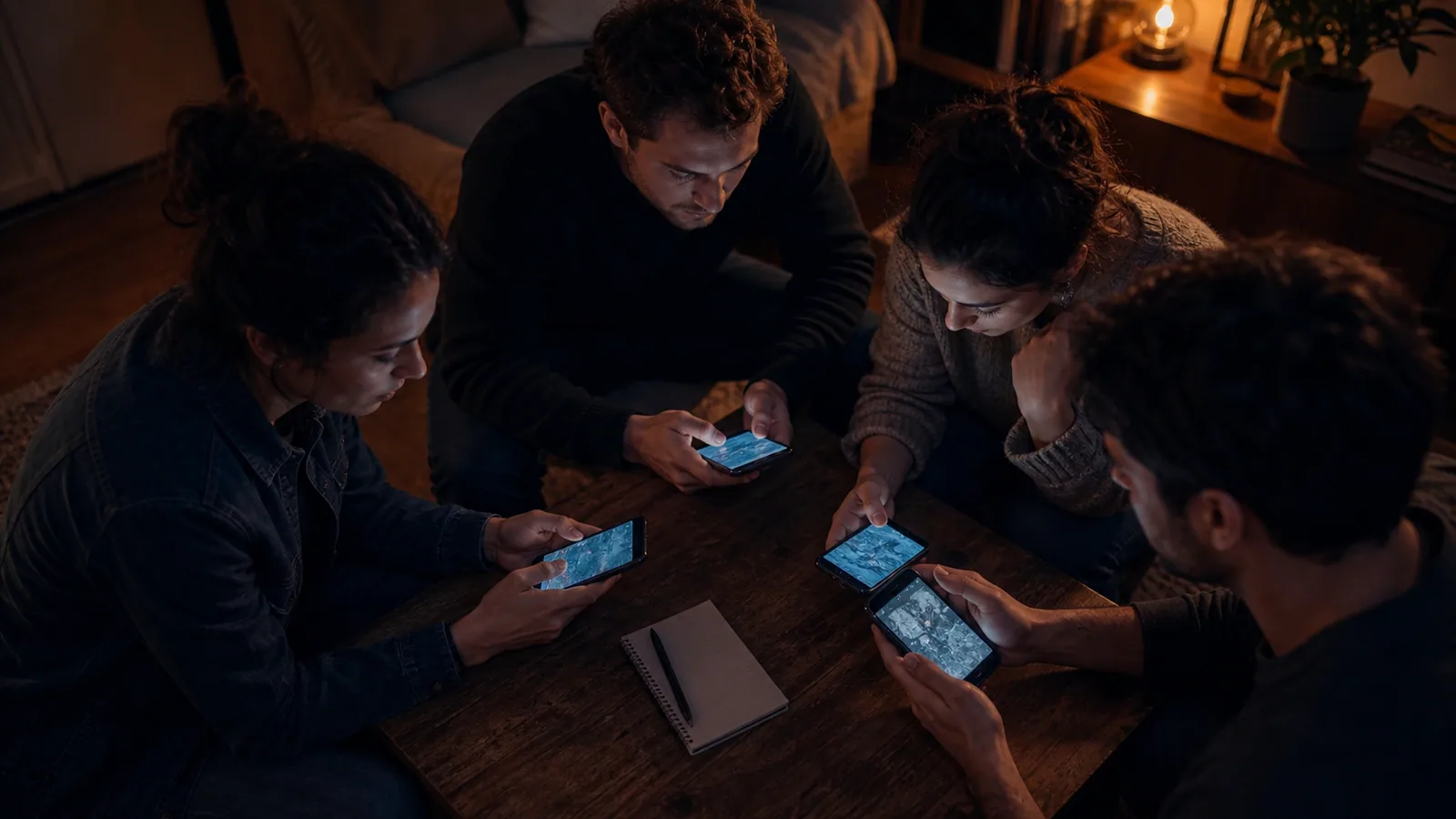
Escape Prime is designed for 1 to 4 players. Solo players control the whole investigation. With two people, conversations are fast and every discovery matters. With three or four, distributing clues creates more discussion and surprises.
For a larger group, create several teams and launch the same adventure in parallel. Compare completion time, score, and hints used afterward.
Player age
Reading ability, logic, and attention matter more than an exact age. Children can participate with an adult once they understand the instructions and can describe their observations. Read our guide to escape games with children for more advice.
Difficulty and duration
Beginners will have more fun completing an accessible adventure than spending the whole evening stuck on one puzzle. Choose progressive difficulty and allow the team to use hints.
Leave a little time around the advertised duration to join the game and discuss it afterward. Players often enjoy revisiting the decisive clue or the false lead that fooled the entire team.
Create atmosphere without decorations
No equipment does not mean no atmosphere. A few adjustments make the experience more immersive:
- dim the lights without making screens hard to read;
- turn on the game audio and avoid unrelated music;
- silence notifications and other distractions;
- prepare drinks and snacks before starting;
- keep a notebook nearby if your team likes taking notes;
- choose a time when nobody needs to leave after ten minutes.
Immersion mainly comes from paying attention to the story. Read the introduction, listen to the dialogue, and resist clicking randomly. Every detail may become a clue.
Mistakes to avoid
Looking at only one screen
If players receive complementary information, sharing one screen all the time removes part of the teamwork. Describe discoveries before showing the answer to everyone else.
Letting one person solve everything
Experienced players can take over without realizing it. Divide responsibilities between observation, note-taking, decoding, and connecting clues. Our guide to the main types of escape game puzzles can help identify everyone's strengths.
Refusing every hint
Using a hint does not mean losing. If the group has stopped progressing and keeps repeating the same ideas, gradual help preserves the pace and enjoyment.
Choosing only by theme
An appealing universe is not enough if its difficulty, length, or player count does not fit your group. Always read the adventure details before starting.
Which format should you choose?
Choose DIY if you enjoy writing, personalizing, and staging games. Pick a printable kit for a birthday activity with physical hiding places. Choose a box if your group likes handling cards and objects.
Choose digital when you want to begin immediately, play with distant friends, or avoid cleanup. For a more detailed look at budget, flexibility, and immersion, read our online escape game vs physical escape room comparison.
Frequently asked questions
Can you play an escape game at home without a printer?
Yes. A fully digital escape game displays the story, documents, and puzzles directly on each device. No PDF or paper component is required.
Does every player need a phone?
One device per player provides the fullest cooperative experience because information can be distributed across the screens. Everyone stays active throughout the investigation.
Can you play in an apartment?
Yes. A digital game does not require hiding clues or moving around your home. A table, sofa, or even separate rooms work perfectly.
Can friends play remotely?
Yes. Participants join the same game from their devices and communicate through an audio or video call, even from different cities or countries.
How long does setup take?
Only a few minutes: choose the adventure, create the game, and let the others join. There are no documents to cut out or clues to hide.
What if we get stuck?
Start by summarizing every discovered element aloud. If no new idea appears, use progressive hints instead of searching for the full solution online.
Your living room is ready for the investigation
Setting up an escape game at home no longer requires a printer, locks, or hours of preparation. With one device per player and a suitable adventure, your team can start investigating within minutes, in the same room or remotely.
Ready to try? Launch Escape Prime and discover your first adventure for free. Gather up to four investigators, share your clues, and see whether your team can uncover the whole truth.
Move from theory to the field.
For 1 to 4 players, with no equipment to prepare. Gather your team and start investigating.